Q&A with Dr Susan Galbraith
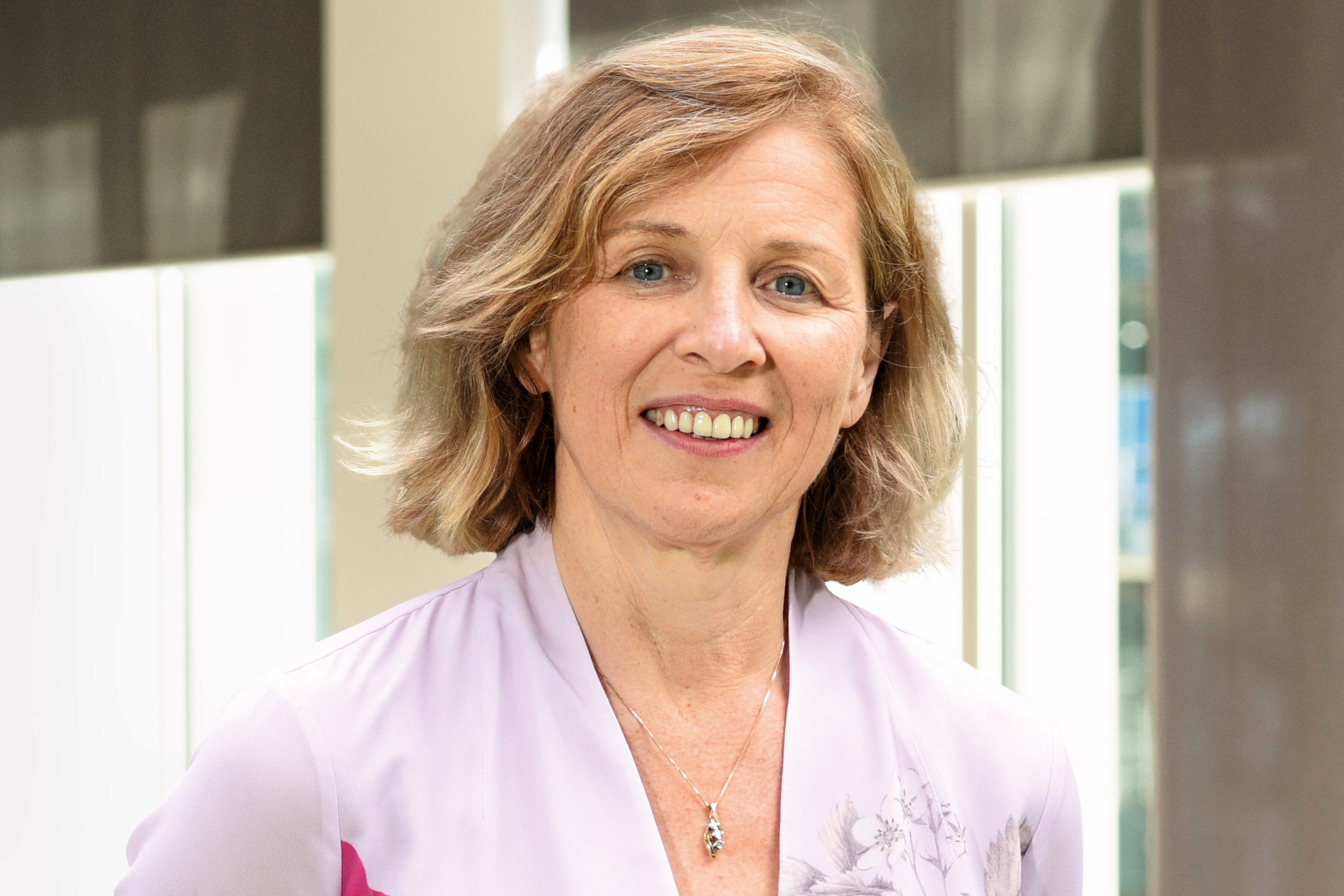
Dr Susan Galbraith (Medicine, 1987) has dedicated her career to improving outcomes for cancer patients, first as a clinical oncologist and now as a drug developer. Susan is Executive Vice President of Oncology Haematology R&D at AstraZeneca and has contributed to the development of 13 approved medicines for cancer treatment. A Clinical Oncologist by training, Susan studied medicine at Robinson College and the University of Manchester and holds a PhD from the University of London.
In recognition of her contributions to oncology drug development, Susan received an honorary Doctorate of Medical Science from the Institute of Cancer Research (ICR), is a Fellow of the Academy of Medical Sciences, and has been elected to the Academy of the American Association for Cancer Research (AACR). Susan is also a member of the Cambridge Cancer Centre Executive Committee, the Scientific Advisory Board of the ICR, and the European Association of Cancer Research (EACR) Advisory Council.
Q: Looking back to your time at Robinson and your early medical training, what experiences or influences first sparked your interest in oncology?
A: When I was doing my medical training after graduating from Robinson, I was planning to specialise in cardiology, but I didn’t get the placement I wanted. However, things worked out for the best as the placement I got gave me my first experience of oncology and I’ve never looked back! What particularly appealed was the combination of the science - cancer biology is fascinating - and caring for patients at a very hard time in their lives, allowing me to combine my scientific curiosity with compassion. I’m grateful for my time at Robinson and the Cambridge School of Clinical Medicine as it gave me a network of fellow students who provided friendship and support through the early years of my career and the long hours on the wards.
Q: Cambridge is a global hub of excellence for academia, research and innovation. What do you value most about the Cambridge ecosystem?
A: The concentration of talent in Cambridge across colleges, hospitals, institutes and industry, from fundamental biology all the way to clinical medicine, is truly remarkable. There is also a culture of collaboration across these different sectors which raises the bar for all of us and drives innovation. A lot of our medicines have benefited from collaboration across the ecosystem, for example with a drug candidate we are developing for breast cancer a lot of the early work was done in collaboration with Dr Richard Baird from the Cancer Research UK, Cambridge Cancer Centre. We are also collaborating with Professor Rebecca Fitzgerald, Director of the Early Cancer Institute and Professor of Cancer Prevention, University of Cambridge, on the early detection of cancer. Finally, I value the proximity of our research, particularly our Discovery Centre (DISC), to patients through the Cambridge Biomedical Campus which keeps the science anchored to the unmet needs we are trying to solve and focuses us on our collective goals.
Q: You have contributed to the development of 13 approved cancer medicines to date. Which of your achievements are you most proud of and why?
A: It’s hard to pick just one of the medicines I’ve had a role in developing – that’s like asking me to choose a favourite child! However, what I can say is I get huge pride when a therapy changes a standard of care and gives patients more time with a better quality of life. An example of how we’ve been able to do this is through our biomarker driven approach that match the right patient to the right therapy. Seeing precision medicine move from concept to routine practice has been particularly gratifying because it acknowledges the biological diversity of cancer. All of this of course wouldn’t be possible without a great many teams working from target discovery through to pivotal trials, regulatory and beyond, so I’m also proud of building and sustaining high-performing multidisciplinary teams that can repeatedly deliver first or best in class medicines.
Q: Cancer treatment is evolving rapidly, which advancements do you believe will have the greatest impact in the next 5-10 years?
A: There are some key trends with real potential to transform cancer outcomes. First, I believe that we can improve on backbone chemotherapy and radiotherapy by deploying next generation antibody drug conjugates (ADCs) with optimised linkers and payloads, and by integrating radioconjugates (RCs) to enhance radiotherapy regimens.
Second, I think we will move beyond today’s immune checkpoint inhibitors by segmenting the cancers sensitive to immune-directed treatment with the next wave of bispecific immuno oncology agents, which as the name suggests target two mechanisms at the same time. These medicines have the potential to offer more targeted approaches, aligned to specific biomarker profiles, with the aim of improving outcomes.
Third is the scaling of cell therapies and T cell engagers (TCEs) to enable many more patients to benefit from these potentially transformative medicines in both haematological malignancies and solid tumours. We ae starting to move from custom made therapies toward off the shelf models that can make these types of treatments more scalable and accessible.
Finally, treating cancer earlier before and after surgery with combination regimens is important. Earlier intervention offers the best chance for long-term outcome and cures. With advances in screening and diagnostics, it is becoming increasingly common to treat earlier, particularly the pre-surgery setting, where the potential to change the disease trajectory is greatest.