
Robinson Bye-Fellows
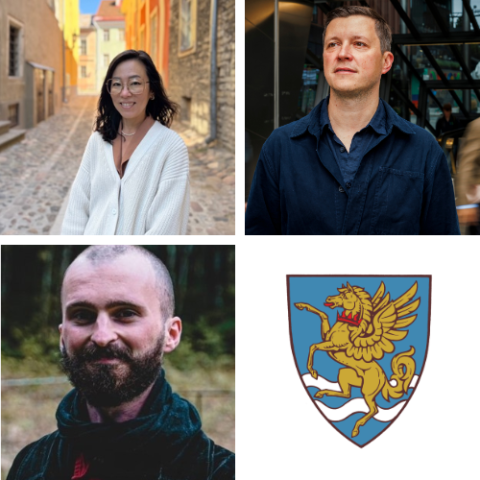
Welcome to the following Robinson Bye-Fellows, Professor Andres Sevtsuk, Dr Lily Song, and Dr John Donegan Cross.
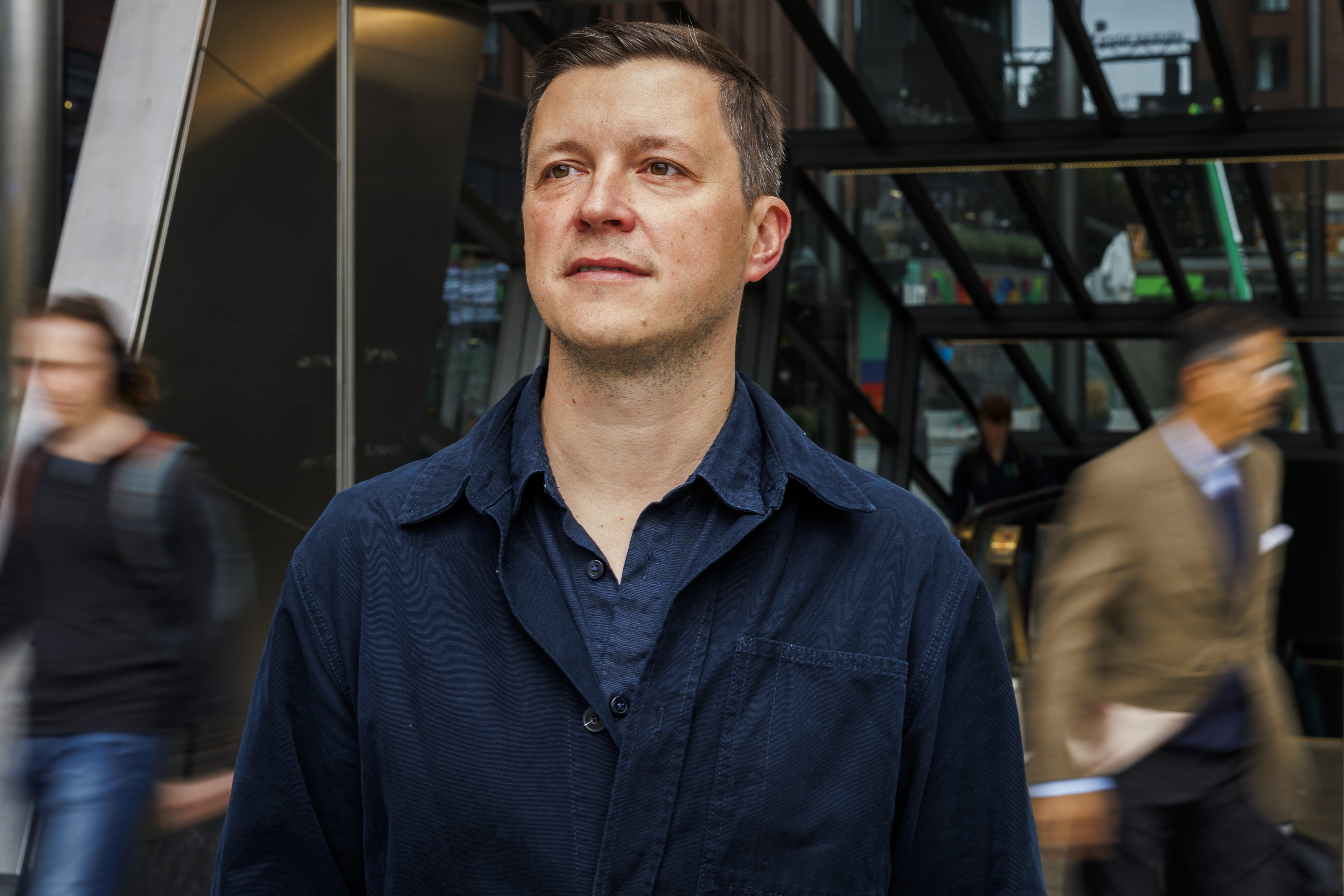
Professor Andres Sevtsuk is a Charles and Ann Spaulding Associate Professor of Urban Science and Planning at the Department of Urban Studies and Planning at MIT, and head of the City Design and Development Group. Andres also leads the City Form Lab at MIT, where his research focuses on the influence of built environments on sustainable travel behavior and on public qualities of cities--urban ground floors, amenity location patterns, and walkability. His work contributes to making city environments more walkable, sustainable and equitable, bridging the fields of urban design, spatial analytics and mobility research. Andres is the author of the Urban Network Analysis framework and software tools, used by researchers and practitioners around the world to model pedestrian activity in cities and to study coordinated land use and transportation development in ways that reduce transportation carbon emissions. He has published numerous papers and a book entitled “Street Commerce: Creating Vibrant Urban Sidewalks” with Penn Press and before that, "Urban Network Analysis: Tools for Modeling Walking and Biking in Cities" with Tianjin University Press. Andres has collaborated with a number of city governments, international organizations, planning practices and developers on urban designs, plans and policies in both developed and rapidly developing urban environments, including those in US, Indonesia, Australia, Lebanon, Estonia and Singapore. He has led various international research projects, published in planning, transportation and urban design journals, and received numerous awards for his work. His classes at MIT include 11.001 Introduction to Urban Design and Development, 11.324/11.024 Modeling Pedestrian Activity in Cities, as well as urban design workshops and studios. In 2025, he is also launching at MITx/EdX course "Introduction to Pedestrian Mobility in Cities”. Before joining MIT, Andres was an Associate Professor of Urban Planning and Design at the Harvard Graduate School of Design. He holds a PhD from the Department of Urban Studies and Planning and an SMArchs in Architecture and Urbanism from MIT.
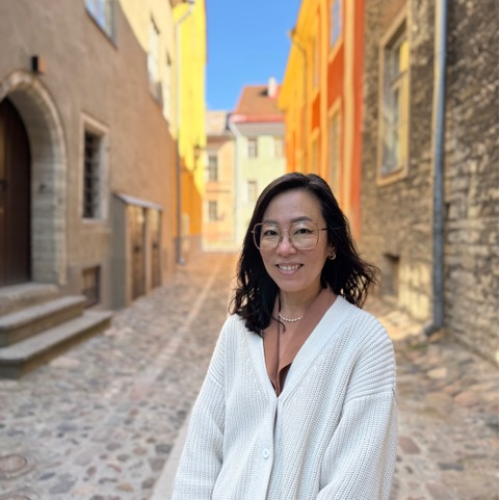
Dr. Lily Song is an urban planner and activist-scholar who specializes in studying and undertaking long-term community engagement practices in addition to being an Assistant Professor in the School of Architecture and the School of Public Policy and Urban Planning at Northeastern University in Boston, Massachusetts. Her research and scholarship focus on the relations between urban infrastructure and redevelopment initiatives, socio-spatial inequality, and race, class, and gender politics in American cities and other decolonizing contexts. Her work both analyzes and informs infrastructure-based mobilizations and experiments that center the experiences and insights of historically marginalized groups as bases for reparative planning and design. Dr. Song serves on the Advisory Board of the non-profit participatory planning organization, Yayasan Kota Kita. She was previously a Lecturer in Urban Planning and Design at the Harvard Graduate School of Design (GSD), where she was Founding Coordinator of Harvard CoDesign, a GSD initiative to strengthen links between design pedagogy, research, practice, and activism. She holds a PhD in Urban and Regional Planning from the Massachusetts Institute of Technology, MA in Urban and Regional Planning from the University of California— Los Angeles, and BA in Ethnic Studies from UC Berkeley.
During her time as a Bye-Fellow, Dr. Song will be working on a book focused on spatial planning and design initiatives that seek to expose, confront, reconcile, and heal historical injustices through reparative methods of reckoning, reimagining, and rebuilding. Reparative, rooted in the word repair, refers to mending or fixing what is broken, restoring to a sound or healthy state, and making amends, remedying, or setting right to a fairer, more accurate, and desirable state. It is a distinct form of adaptive reuse, an architectural and urban design practice of reusing existing structures for purposes other than what they were originally built or designed for (Wong 2016). Beyond applying the economic and environmental logics of adaptive reuse, reparative planning and design projects actively deal with thorny societal issues and ethical dilemmas in forward-looking, transformative ways that are simultaneously fraught with tension and conflict (Song 2023; Williams 2020). Besides intervening physically and spatially, they seek to give the sites and stories back to most-impacted communities and pay forward the lessons to broader publics to build more equitable and just futures.
Recent publications
At Home in Chinatown in Arts.
Notes from the anti-displacement studio in Radical Teacher.
From Infrastructural repair to reparative planning in the Journal of the American Planning Association.
Towards reparative design pedagogies in the Journal of Architectural Education.
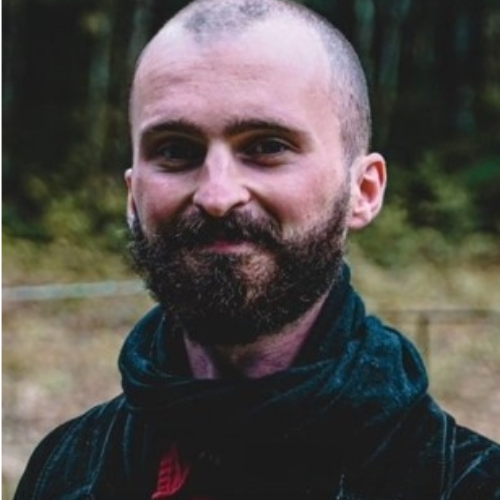
Dr John Donegan-Cross completed his BA in Chinese at the University of Edinburgh, his MPhil in Traditional East Asia at the University of Oxford, and his PhD at the University of Cambridge. For his thesis he focussed on the significance of birds in Early Chinese Poetry. His second project at the Needham Research Institute explores the relationships between astronomical knowledge and poetic image in poetry of Late Imperial China.
Welcome to Robinson Andres, Lily and John!