
Trying to Understand the Misfolding Proteins of the Brain
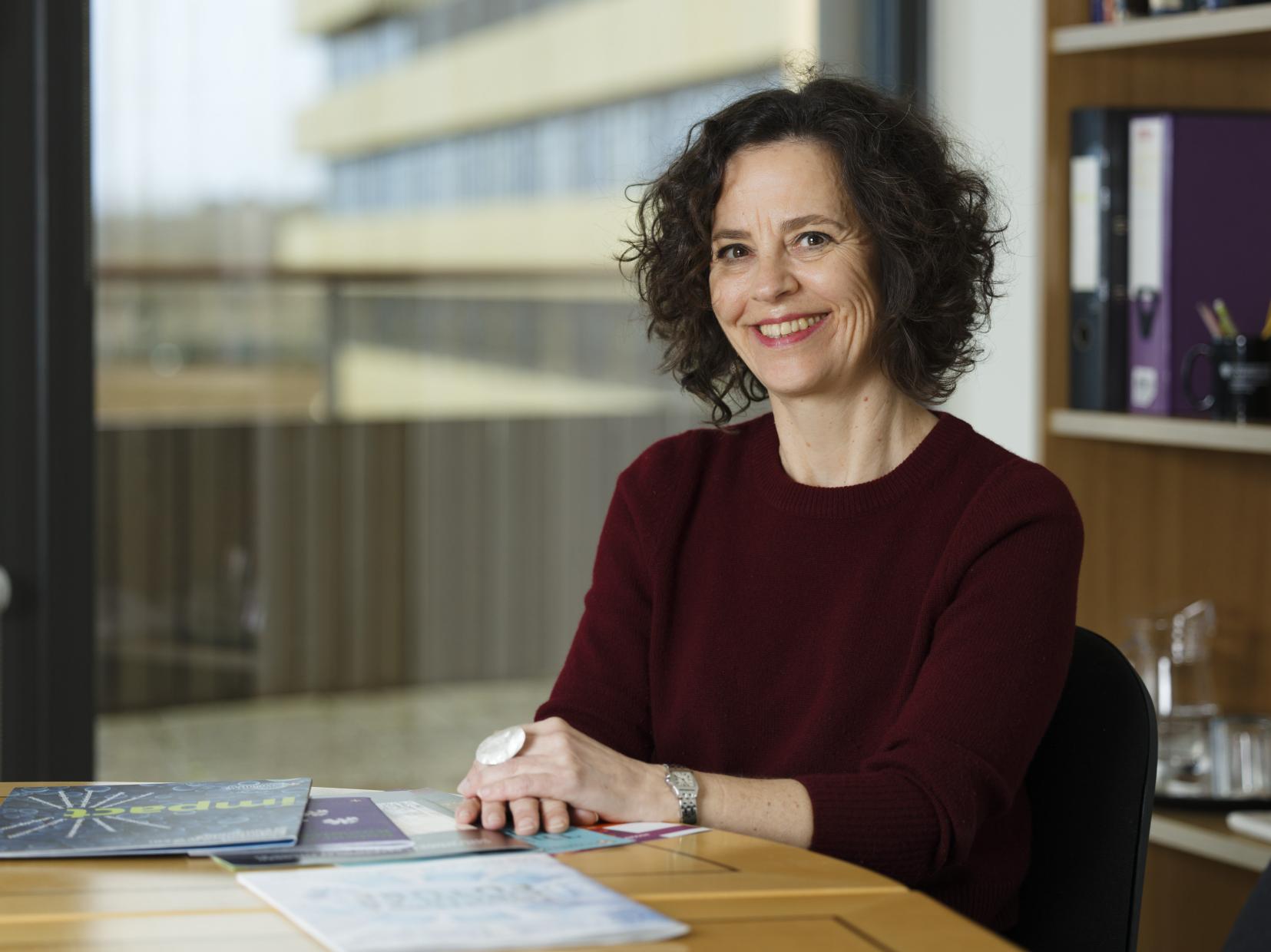
Gabriele Kaminski Schierle is Professor of Molecular Neuroscience at the University of Cambridge, and serves as the leader of the Molecular Neuroscience Group. She has built up an internationally recognised research group and infrastructure to investigate the molecular mechanisms causing proteins to misfold and mimic aspects of Alzheimer’s Disease and Huntington’s Disease. Her group has pioneered a research approach that combines advanced biophysical/optical methods with molecular neurobiology for research into neurodegeneration.
As a molecular neuroscientist, my career has been driven by a desire to visualise the invisible processes that cause our brains to fail as we age. In my lab, we treat the brain not just as a biological organ, but as a complex landscape of physics and chemistry.
Our goal is to understand why certain proteins, which are essential for a healthy life, suddenly change shape and become toxic, leading to devastating conditions like Alzheimer’s and Parkinson’s disease.
One of the discoveries we made was that as these disease-related proteins transform into toxic structures, they develop their own intrinsic fluorescence. Specifically, we found that they possess energy states that we can excite with light; under the correct illumination, they light up like dye molecules, which we can thus detect even in biological tissues. This was a paradigm shift. Traditionally, scientists had to attach bulky chemical dyes to proteins to see them under a microscope, which often changed how the proteins behaved. By discovering this, we’ve opened a door to detecting these diseases earlier and more accurately, even using this knowledge to inspire new types of biological sensors and materials.
To truly understand how these proteins spread like "seeds" from cell to cell, we needed better "eyes". My team was among the first to apply optical super-resolution microscopy to this field. This technique is so powerful that my research was used as an example in the 2014 Nobel lecture to illustrate the concept. It allows us to watch, with nanometer precision, as toxic proteins induce healthy proteins to misfold.
We also developed fluorescence-lifetime sensors. These are essentially "fitness trackers" for proteins that provide a real-time readout of their health and shape within living cells. If we excite the amyloids, attached to small dye molecule, with short pulses of light, they emit light for a short period of time in the aftermath, much like a bell "rings down" after it has been struck. We found that these "ringdown times" for amyloids inform us on the severity of aggregation and, hence, the progression of the disease. These tools are now used by laboratories worldwide to link the tiny movements of molecules to the actual progression of dementia.
In Parkinson’s disease, a protein called alpha-synuclein is the primary culprit. For a long time, it was viewed only as a "bad actor". However, our group identified its vital, positive role in how brain cells signal to one another. By understanding its "day job," we are better equipped to understand why things go wrong when it stops functioning correctly. This has opened entirely new therapeutic directions that focus on restoring its natural function rather than just clearing away the damage.
Beyond the microscope, I am deeply committed to the community that makes this research possible. As the Director of the MPhil in Biotechnology, I help train a diverse, international cohort of students, merging the worlds of biology, physics, and engineering. I believe that the biggest problems in medicine will only be solved when we stop thinking in "silos" and start collaborating across disciplines.
Being a Fellow of Robinson College since 2018 is a cornerstone of my life in Cambridge. Robinson is more than just an academic home; it is a vibrant, supportive community that mirrors the interdisciplinary nature of my research. Whether I am serving on the College Council or the Safety Committee, I am constantly reminded of the value of a grounded, ambitious academic environment where a casual dinner conversation can spark the next great scientific insight.
Looking ahead, I am incredibly optimistic. By combining deep learning and advanced biophotonics, we are moving toward a future where we can predict "brain age" and neurodegeneration long before symptoms appear. The goal is no longer just to treat the end stages of these diseases, but to intervene when the very first proteins begin to misfold.
I am deeply honoured to have been awarded the 2026 Sosei Heptares Prize in Biophysics. This recognition is not just for me, but for the many talented students and collaborators who have shared this journey of discovery with me.