
Meet the Robinsonians Leading the Way in Treating Rare Genetic Diseases and Cancer
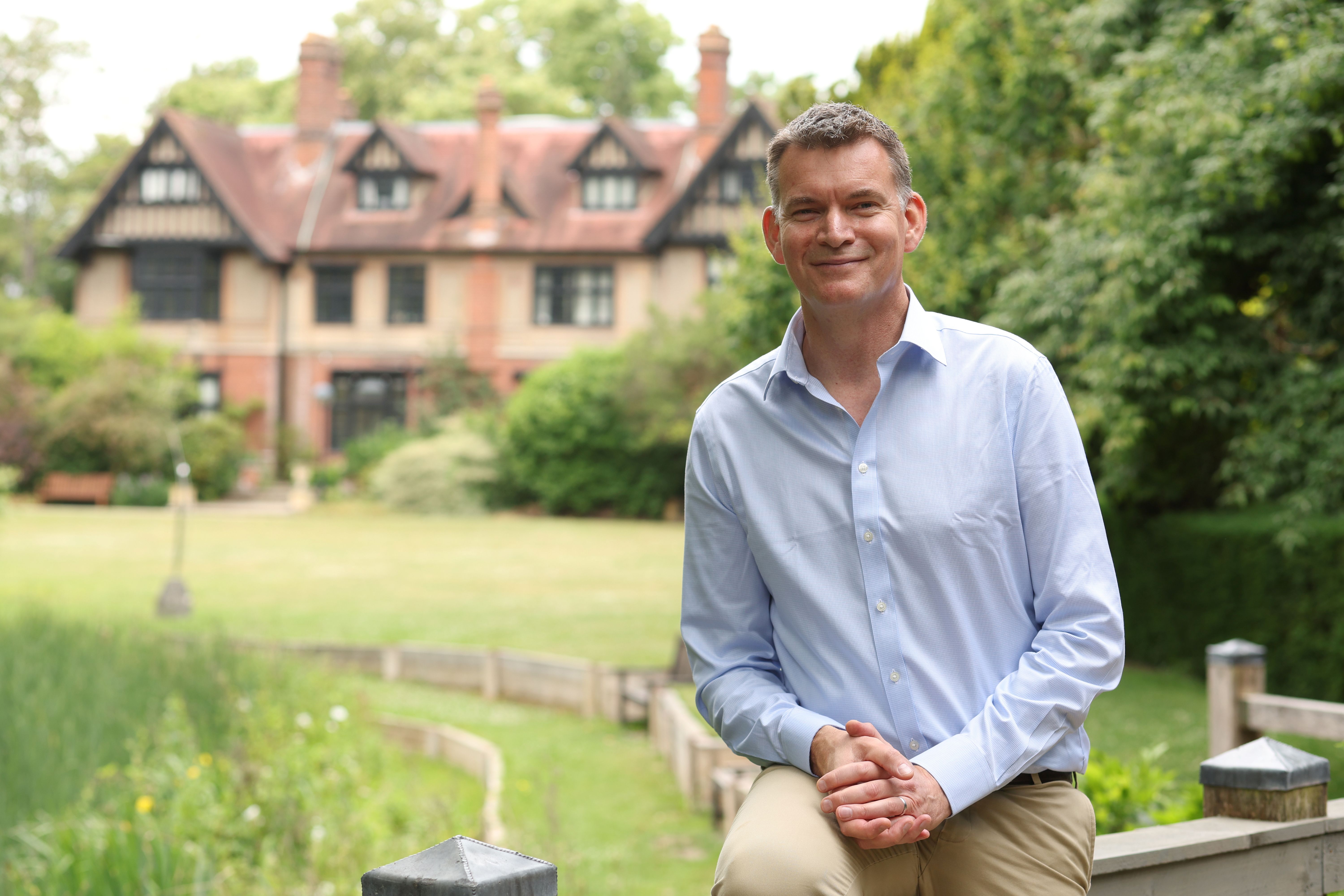
When James Harrison (Natural Sciences, 1992), pictured above, returned to Robinson College to speak at a Scholars’ Dinner, he did not expect to recruit his first employee. But that evening led to a conversation with fellow alumnus Steve Fuller (Natural Sciences, 2005) and the beginning of a working relationship which now places them at the forefront of cutting-edge treatments for rare genetic diseases and cancer.
James, now an Honorary Fellow of Robinson, is Founder and Group CEO of Cycle Pharmaceuticals, a company he created ‘from a blank sheet of paper’ to provide treatments for children with rare genetic diseases. Steve became Cycle’s first employee in 2013 and is now the Chief Strategy Officer. Fellow Robinsonians Martin Smith (Natural Sciences, 1992) and Mike Dinan (Natural Sciences, 2009) followed suit – Martin is Cycle’s Director of Commercial Operations and Mike is Associate Director of Product Management.
What began as a small start-up has grown into a thriving international pharmaceutical business at the cutting-edge of transformative treatments and patient care. Cycle now employs 220 people across Cambridge and the US, recorded revenue of more than $205 million in 2025, and was ranked in the Sunday Times Tech 100 for the second consecutive year in 2026. The company also launched a Graduate Recruitment Programme this year to attract the next generation of scientific talent.
Before founding Cycle, James worked in private equity and pharmaceuticals, where he became increasingly aware of how few treatment options existed for children with life-threatening rare diseases.
James says: "Our aim at Cycle is to help some of the most fragile members of our community - children born with rare genetic diseases – who often have little to no support or hope of treatment.”
He explains: “The sad truth is that there are around 7,000 rare diseases in the world with only around 1,000 medicines to treat them. The number of untreatable diseases is growing because, as our knowledge of them develops, they are divided into smaller subtypes at a faster rate than drugs are approved to treat them.
“I founded Cycle to do something about this,” he continues. “We now have nine drugs in the US market treating more than 2,500 patients, in addition to our other patients in the UK and around the globe.”
James and Steve invented Cycle’s first drug, NITYR, which treats a rare genetic metabolic disorder called Hereditary Tyrosinemia Type 1. This life-saving drug has been dosed to babies as young as one-day old, effectively saving their lives.
Social responsibility has remained central to the company’s mission. As such, Cycle established a programme offering free treatment to patients with rare genetic diseases in the developing world and is currently treating 100 patients with life-long illnesses in Pakistan, India, Bangladesh and several African countries.
James says: "The best news I get is when I’m sent a photo from a Bangladeshi family of their son going to school for his first day, when he would likely have died of liver failure without our support. This is why I do what I do."
Cycle’s work extends beyond prescribing medicines. The company also provides ongoing support through dieticians, nurses and patient-care teams who help families manage the long-term practical demands of treatment.
“These are lifelong conditions with lifelong treatments,” James explains. “Improving quality of life is just as important as the medicine itself.”
Meanwhile, Cycle’s ground-breaking work on cancer includes the CRISTAL-APC trial, led by Robinson’s Dr Bristi Basu. Developed and funded by Cycle, the trial combines standard chemotherapy with VP-002, a compound designed not to target the tumour directly but to alter its surrounding environment to improve the effectiveness of treatment while reducing side effects.
Steve says: “With CRISTAL-APC, we’ve worked with patients to design a trial that has the potential to give them not only more time but also a better quality of life. It could make a huge difference for these people and their families.”
From rare genetic diseases to some of the most challenging forms of cancer, the work of James, Steve and their colleagues at Cycle is helping to turn scientific advances into life-changing treatments – markedly improving the quality of life of their patients and, in many cases, saving lives.