
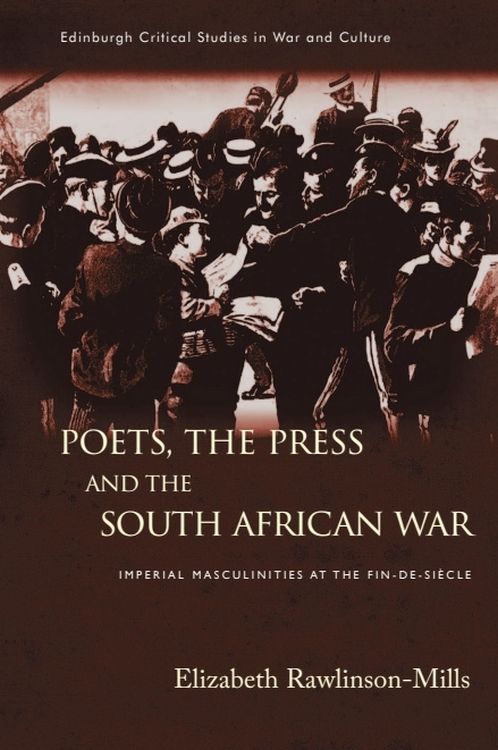
"Poets, the Press and the South African War: Imperial Masculinities at the Fin-de-Siècle" by Elizabeth Rawlinson-Mills just published
"Poets, the Press and the South African War: Imperial Masculinities at the Fin-de-Siècle" by Elizabeth (Lizzi) Rawlinson-Mills just published.
Thousands of poems were published in British daily newspapers during the South African War. Serious poets and enthusiastic amateurs, serving soldiers and anonymous correspondents chose newspaper publication, self-consciously assuming a range of public roles and contributing to public debates. Many of these poems have been hidden away in archives ever since, and the networks of relationships between canonical names and anonymous and undiscovered poets have remained invisible. This book brings these works and relationships into the light. The stories they have to tell, of literature at work in the world, of poems speaking to and answering one another, upends received ideas about late-Victorian poetry. The extraordinary and international influence of Kipling – his voices and verse forms, as much as his politics – comes into focus, as do the outlines of vital national debates about military masculinities, British national character, imperial ambitions and the national or moral costs of a controversial war. Featuring an anthology of sixty previously forgotten poems, this essential volume will be of interest to students of colonialism and post-colonialism, literature, war studies, social history and periodical studies, at undergraduate and postgraduate levels.
On the publication of her book Lizzi said:
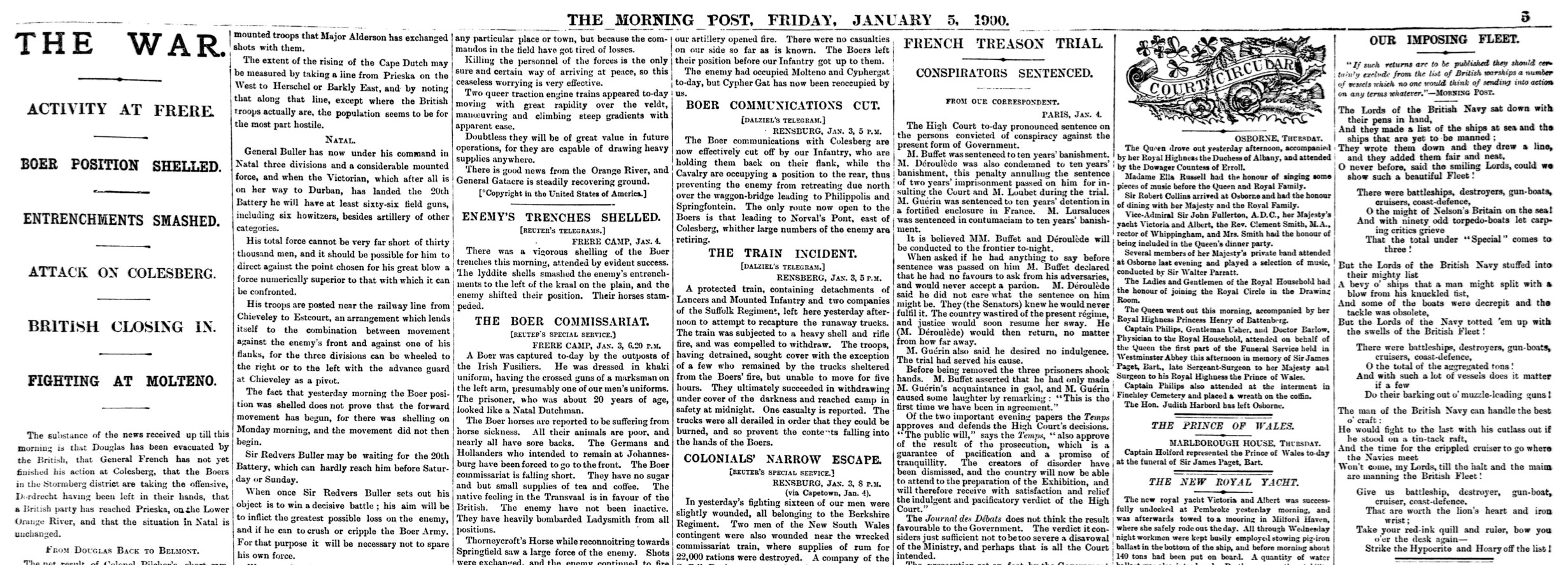
"This book is the result of 13 years of scholarship on poems published in newspapers over a three year period at the turn of the twentieth century. It might surprise you to know that there were poems in newspapers, but there certainly were – in fact, most Victorians will have read many many more poems in that form than in the more high-status poetry volumes we are accustomed to thinking of as the natural home for poems. One strand of my argument, therefore, is that we are getting literary history wrong by limiting our scholarship to the “big name” poets (like Rudyard Kipling, Thomas Hardy, Algernon Swinburn, Alfred Austin) whose work comes down to us in books and anthologies. The field of Victorian poetry is much noisier and more diverse than that. The poems that the trench poets of the First World War grew up reading were not limited to those that appear on literature courses of Victorian poetry.
Moreover, while some have dismissed poems published in newspapers as sub-literary “filler”, as “bovinely jingo” patriotic tubthumping, my book argues that in fact these poems were hugely varied, in literary quality as well as voice and perspective. They also had a global reach, circulating widely in letters, scrapbooks, and the newspapers of the English-speaking world. And they made a real difference – not least to the ways in which ordinary folks engaged with the South African War of 1899-1902 and the political and ethical questions it raised, about the status of working-class soldiers and their families, about imperial ends and means, about race and Britishness, and about masculinity. In one case, a poem published in a newspaper caused such a furore that it ended up being debated in the House of Commons. At a time when it was hard to express anti-imperialist and anti-war views in newsprint, poetry offered a safe space where writers could use voice in a kind of serious play, saying more – and asking harder questions – than would be admissible in editorial prose.
These poems are not just historical artefacts, though it is illuminating to read them as such; they are also interventions in literary culture, and while we may not recognise the names of their authors (indeed, many of their authors chose anonymity for all kinds of good reasons), they engaged with one another on issues of literary quality and craft as well as political points of view. They represent literature at work in the world, aiming to speak to a wide constituency of readers, and inspiring responses from all kinds of different readers. As a teacher and teacher-educator, I am intrigued and inspired by the very different place occupied by poetry in popular discourse and public debate.
I was very grateful to be able to include in my book an anthology of 60 poems that haven’t been published since their original appearance in the newspapers of 1899-1902. I like to think that their unknown, often anonymous authors would be delighted to think of their writing meeting new readers in 2026, and I think readers will be surprised to see the resonances between the political rhetoric of this high-point (and crisis point) of Victorian imperialism and our own time".
Order from Edinburgh University Press here